AC Running But Not Blowing Cold Air: 6 Checks To Make First
An air conditioner that runs constantly without cooling is usually short on airflow, short on refrigerant, or has iced up. Here is how to tell which.
24/7
Emergency service
Same Day
Most repairs
Licensed
& fully insured
Upfront
Pricing, no surprises
Call (877) 717-8383 for 24 hour service.
Short answer
Set the thermostat to cool and at least five degrees below room temperature, then check that the air filter is clean and every supply vent is open. Go outside and confirm the condenser fan is spinning and the coil is not packed with dirt or leaves. If the indoor coil or the copper line is covered in ice, shut the system off and run the fan only for a few hours to thaw it. If the system still blows warm after that, the cause is usually low refrigerant, a failed capacitor or a failing compressor, and it needs a technician.
Before you do anything
Do not open the electrical disconnect at the outdoor unit or remove panels from the condenser. Capacitors hold a charge even with the power off and can injure you badly.
Six Checks Before You Call a Technician
- 1
Check the thermostat settings
Confirm the mode is set to cool and not fan or auto changeover, and drop the setpoint at least five degrees below the current room temperature. If the fan is set to on rather than auto, it blows unconditioned air between cooling cycles, which feels exactly like a system that stopped cooling. Replace the batteries if the display is dim or blank.
- 2
Look at the air filter
A filter loaded with dust starves the system of airflow, which drops output and eventually freezes the indoor coil. Pull it out and hold it up to the light. If you cannot see light through it, replace it and run the system for an hour before judging anything else.
- 3
Check the breakers and the outdoor disconnect
Central systems run on two circuits, one for the indoor air handler and one for the outdoor condenser. If the indoor blower runs but the outdoor unit is dead, the condenser breaker has likely tripped. Reset it once. If it trips again, stop and call, because a repeated trip means an electrical fault.
- 4
Inspect the outdoor unit
Walk out and listen. The fan on top should be spinning and you should hear the compressor. Clear leaves, grass and debris away from the coil fins and give the unit a couple of feet of clearance on all sides. A humming unit with a stationary fan usually points to a failed run capacitor.
- 5
Look for ice
Check the copper refrigerant line where it enters the house and the indoor coil if it is accessible. Ice anywhere means either restricted airflow or low refrigerant. Switch the system to off, set the fan to on, and let it thaw completely for three to four hours before running cooling again.
- 6
Check the vents and returns
Closed or blocked supply registers and a return grille buried behind furniture both reduce airflow enough to hurt performance. Open every register in the house, including rooms you are not using, and clear the return. In older homes with retrofitted ductwork this alone explains a lot of weak cooling complaints.
What Causes an Air Conditioner To Run Without Cooling
When a system runs continuously but the house never reaches the setpoint, the problem falls into one of three buckets: it is not moving enough air, it is not moving enough heat, or it is not actually running the part that does the cooling. Working out which bucket you are in explains most of what happens next.
- Airflow restriction: dirty filter, collapsed flex duct, blocked returns, or a blower wheel caked with dust
- Low refrigerant charge: almost always a leak somewhere in the coil or line set, not consumption
- Failed run capacitor: the compressor or fan hums but will not start
- Dirty condenser coil: the unit cannot reject heat outside, so it runs constantly with poor output
- Compressor failure: the outdoor fan spins but no cooling happens at all
- Frozen evaporator coil: a symptom of the first two, which then blocks airflow completely
Why Systems Freeze Up
A frozen indoor coil catches people out because it looks like an extreme version of cooling when it is actually a failure. The coil gets cold enough to condense moisture from the air, and if airflow drops or the refrigerant pressure falls, that moisture freezes instead of draining away. The ice then blocks what airflow was left and the problem accelerates.
Running the system harder makes it worse. The correct response is to shut cooling off, leave the fan running to melt the ice, and then fix whatever caused it. If a clean filter and open vents do not prevent it from happening again, the charge is low and the leak has to be found.
Older Jersey City Homes and Cooling Problems
Central air in a converted row house or brownstone is rarely a textbook install. Air handlers end up in attic knee walls and closets, line sets run up the back of the building, and condensers sit on roofs or in narrow rear yards with limited clearance. Ductwork is often undersized because it was threaded through a building that was never designed for it.
The practical consequence is that top floors stay warm, returns are undersized, and long line sets are more vulnerable to leaks and charge problems. When a system has never cooled the upper floor properly, the fault is usually in the design rather than the equipment, and adding refrigerant will not fix it.
When It Is Time To Call
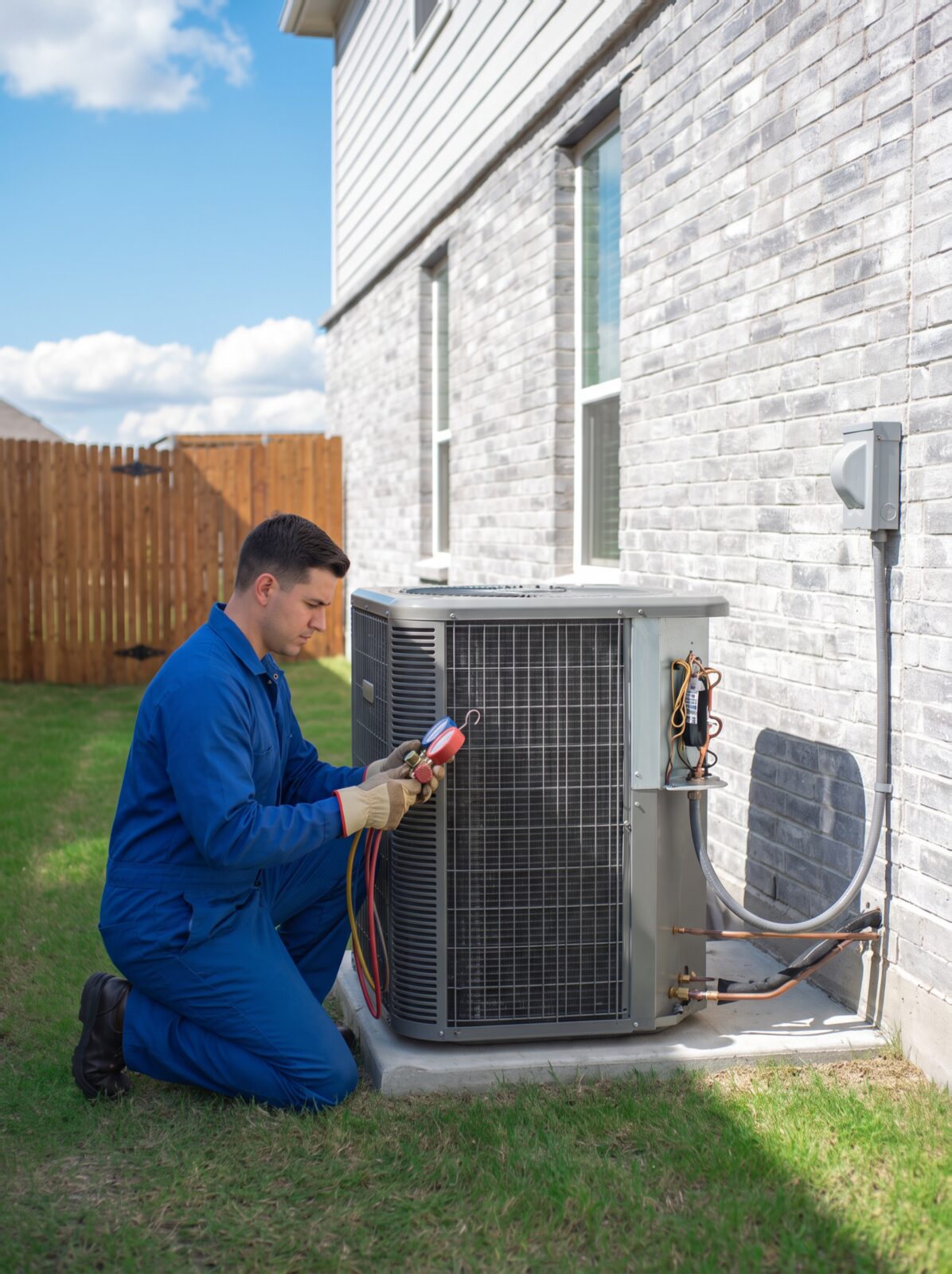
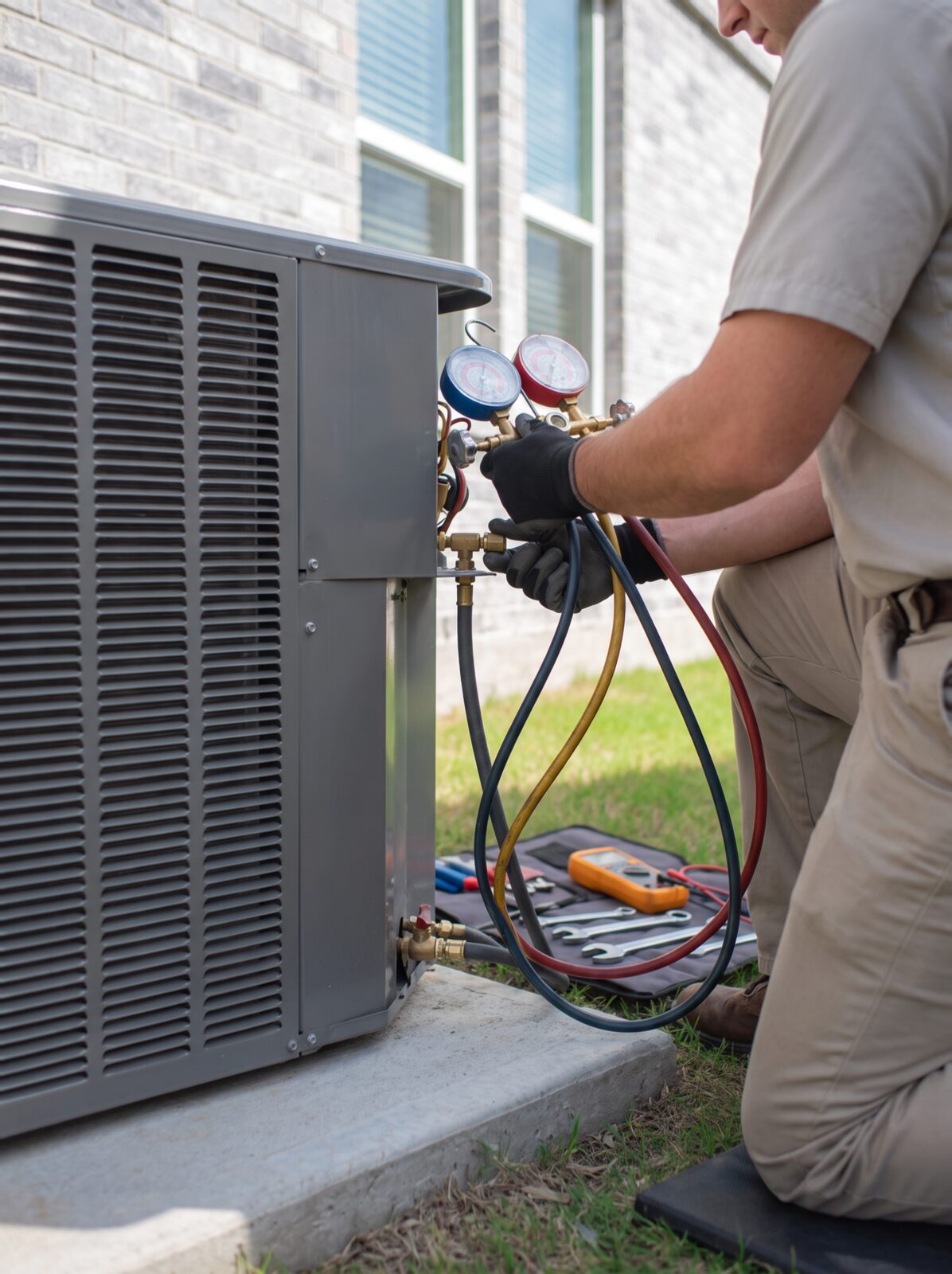
If the basic checks come back clean and the system still will not cool, the remaining causes all involve refrigerant, electrical components or the compressor, and those need gauges and meters rather than guesswork. Refrigerant is also regulated, so charging a system is not a homeowner job.
Call sooner rather than later if the unit is tripping a breaker repeatedly, the outdoor unit is humming without starting, or you can smell burning. Those conditions damage the compressor the longer they run, and a compressor replacement is the most expensive repair on the system.
Frequently Asked Questions
Why is my AC running but not blowing cold air?+
The most common causes are a clogged air filter choking airflow, a low refrigerant charge caused by a leak, a failed run capacitor stopping the compressor, or a condenser coil so dirty it cannot reject heat. Start with the filter, the thermostat mode and the outdoor unit, since those are the checks a homeowner can safely make. If the system still runs warm after that, it needs gauges on it to find the real cause.
Why is my AC freezing up in the summer?+
Ice on the indoor coil or the copper line means the coil is getting colder than it should, almost always from restricted airflow or a low refrigerant charge. A dirty filter, closed vents and a blocked return are the usual airflow culprits, while low charge points to a leak in the system. Turn cooling off, run the fan to thaw the ice completely, then fix the underlying cause before running it again.
How long should my AC run before the house cools down?+
On a normal day a correctly sized system runs in cycles of roughly fifteen to twenty minutes and holds the setpoint comfortably. During a heat wave it is normal for a system to run almost continuously, especially in the late afternoon when the building has absorbed heat all day. What is not normal is running constantly while the indoor temperature climbs.
Does adding refrigerant fix an AC that is not cooling?+
Only as a temporary measure, because air conditioners do not consume refrigerant the way a car uses fuel. A system that is low on charge has a leak, and topping it up without finding that leak means paying for the same repair again next season. The correct approach is to locate and repair the leak, then recharge the system to the manufacturer specification.
Why is my upstairs hot while downstairs is cold?+
Heat rises and upper floors also absorb roof heat, so the top floor is always the hardest to cool. In older homes the problem is usually compounded by undersized ductwork or an insufficient return path on the upper level, which starves those rooms of conditioned air. Balancing dampers, adding a return, or zoning the system are the real fixes, rather than turning the thermostat down further.
Last reviewed September 2026 by the service team at Jersey City Plumbing Heating & Cooling.
Contact Us Today!
If your air conditioner is running without cooling, we can measure the charge, test the electrical components and tell you what is actually failing.
Call Jersey City Plumbing Heating & Cooling at (877) 717-8383 or request service online any time.