Oil Boiler & Furnace Services
Oil boiler and furnace repair, burner service and annual cleanings for oil heating systems year round.
24/7
Emergency service
Same Day
Most repairs
Licensed
& fully insured
Upfront
Pricing, no surprises
Call (877) 717-8383 for 24 hour service.
How Oil Burners Fail
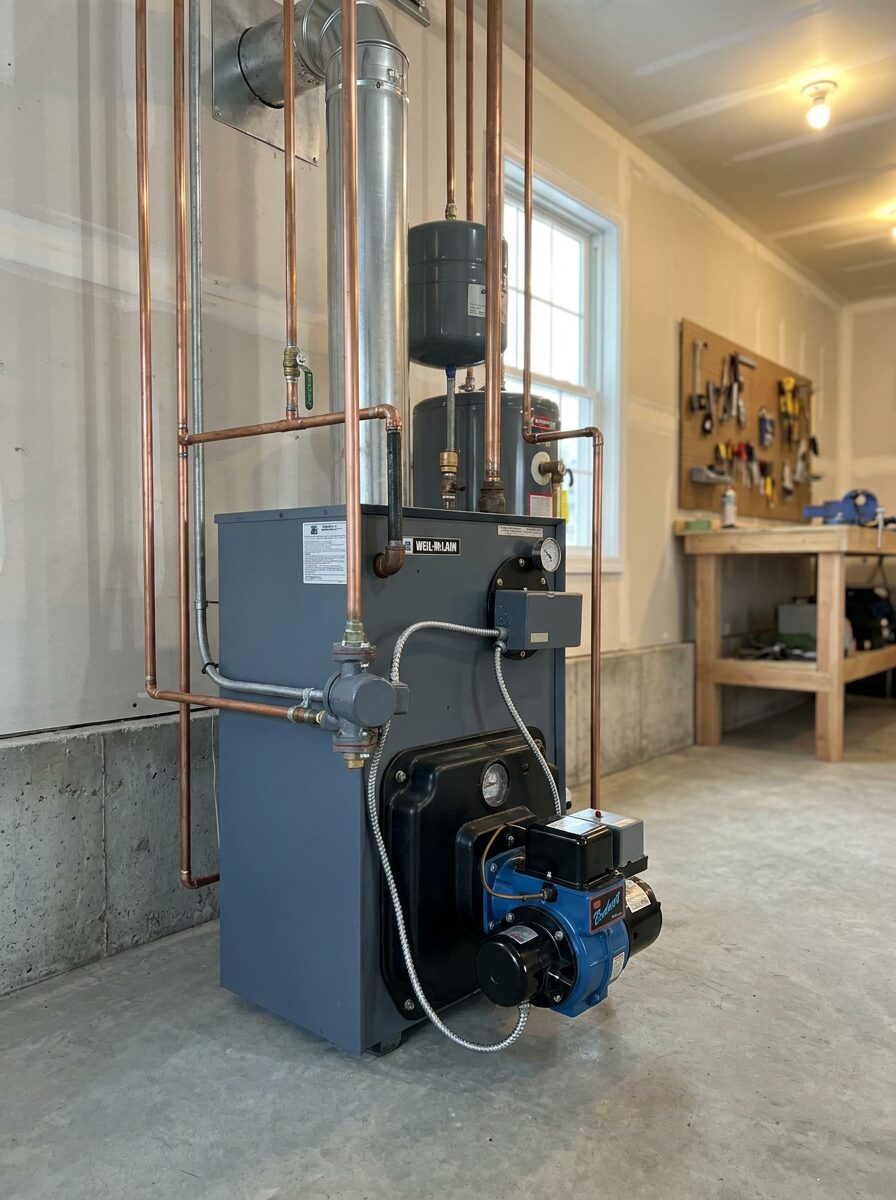
Oil boilers and oil furnaces both run on a burner assembly that atomizes fuel oil, ignites it with an electrode, and forces the flame into a combustion chamber. That assembly needs more regular attention than gas equipment, since oil systems collect soot and residue that gas simply does not produce.
Most oil heat problems trace back to a short list of causes, and we check those first before assuming anything more expensive is wrong.
A technician checks the nozzle spray pattern, the ignition electrode gap, fuel pump pressure and the state of the combustion chamber in sequence, since a fault in any one of those stages shows up as either weak heat, sooting, or the burner failing to fire at all.
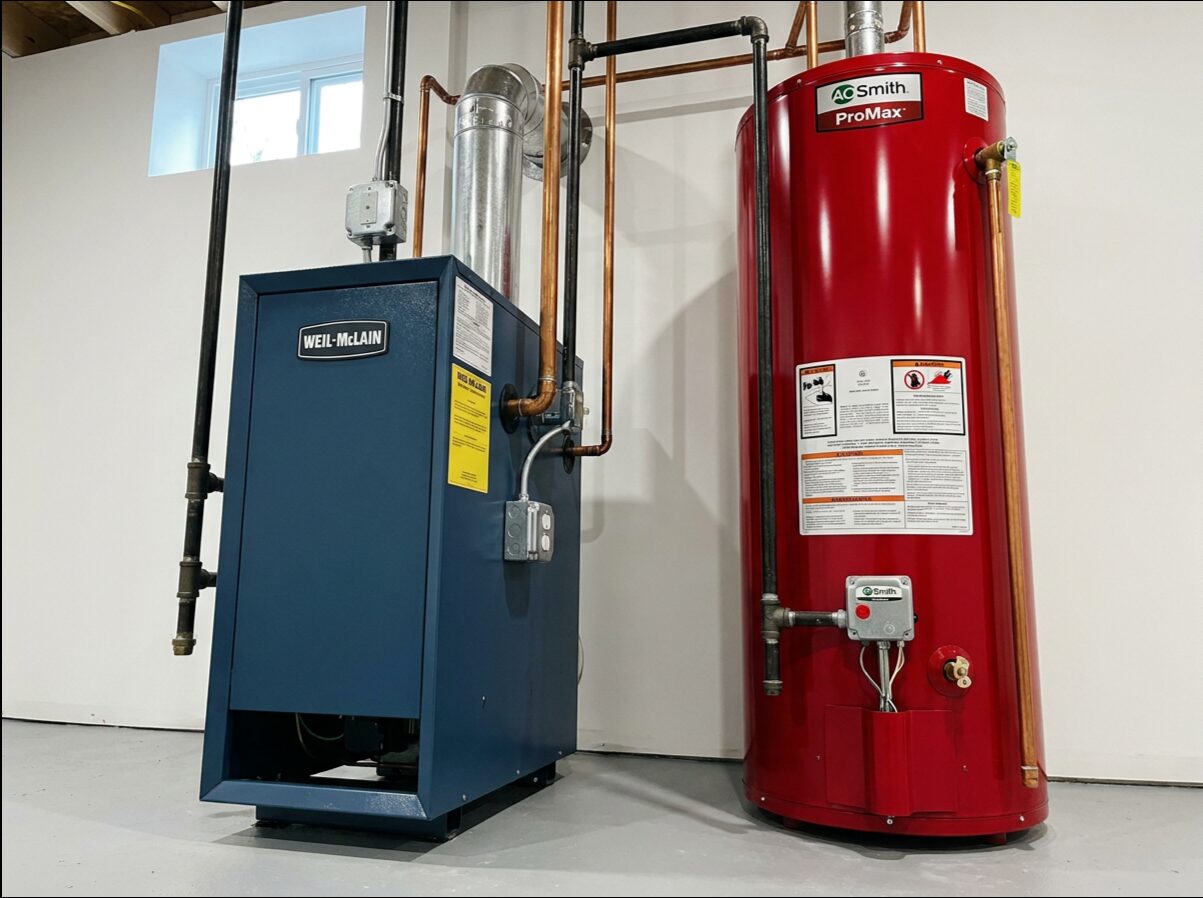
What Causes Most Oil Heat Breakdowns
These are the issues behind the majority of the oil heat calls we run.
- Worn or partially clogged nozzle
- Clogged fuel filter from tank sediment
- Fouled ignition electrode
- Soot buildup in the combustion chamber
- Failing fuel pump or low fuel pressure
- Aging or corroding oil tank
What an Annual Oil System Cleaning Includes
An annual cleaning is not optional on oil equipment the way it can be treated on gas systems. It includes vacuuming the combustion chamber and heat exchanger, replacing the nozzle and filter, cleaning or replacing electrodes, checking fuel pump pressure, and testing combustion efficiency with a flue gas analyzer.
We also inspect the ignition transformer and check that the burner's flame retention head is seated and adjusted correctly, since a slightly misaligned head is a common cause of poor combustion that a visual check alone will not catch.
Skipping a Year Costs More
Skipping a year of service usually shows up first as higher fuel bills, then eventually as a breakdown. Sooted heat exchanger surfaces make the burner run longer to reach the same temperature, burning more fuel in the process and shortening the life of the equipment overall.
Oil Furnace Airflow and Tank Condition
Oil forced air furnaces share the same blower, filter and ductwork concerns as gas furnaces, and we check filters and static pressure on every service call, not just the burner.
The condition of the oil tank matters as much as the burner itself. Old steel tanks can rust from the inside and eventually leak, so we check tank condition, fittings and the fuel line during service visits and flag a tank that is showing its age before it becomes an emergency.
What Affects Cost for Oil Heat Service
Routine cleanings are priced fairly consistently since the scope is the same each time, but repair cost varies by part, with a nozzle or filter swap costing far less than a fuel pump or control replacement. Tank age and condition also affect cost on larger jobs, since a corroding tank may need replacement alongside other repairs rather than being patched around.
Frequently Asked Questions
How often does an oil furnace or boiler need to be serviced?+
Once a year, ideally before the heating season starts. Oil systems build up soot and residue that gas systems do not, so skipping annual service leads to lower efficiency and a higher chance of a mid-winter breakdown. It also usually catches a failing nozzle, electrode or tank issue early, before it turns into a no-heat call.
Why does my oil burner smell or produce black smoke?+
Black smoke or a strong oil smell usually points to incomplete combustion, often from a worn nozzle, incorrect burner adjustment, or a sooted combustion chamber. This wastes fuel and should not be ignored, since ongoing sooting can eventually damage the heat exchanger. A technician can test combustion efficiency and correct the burner settings on the spot.
How do I know if my oil tank is going bad?+
Warning signs include rust or pitting on the tank exterior, an oil odor near the tank, a fuel gauge reading oddly, or staining underneath it. Older steel tanks installed decades ago are most at risk of internal corrosion that is not visible from outside. We check tank condition during service calls and flag issues before they become a leak.
Why does my oil furnace keep shutting off?+
Repeated shutoffs usually come from a clogged nozzle or filter, a fouled electrode, or the burner's safety switch tripping due to failed ignition. A clogged air filter restricting airflow can cause this on forced air systems too. A technician can identify which of these applies and usually fix it in one visit, restoring reliable operation.
Is it worth repairing an old oil boiler or should I replace it?+
Routine repairs like nozzles, filters and electrodes are almost always worth doing. Once a boiler needs major heat exchanger work, has an aging tank, or racks up repeated service calls each season, replacing it or converting to gas often costs less over the following years. We walk through both paths so you can weigh ongoing repair cost against a one-time replacement cost.
Contact Us Today!
Tell us what your oil boiler or furnace is doing and we will get a technician out to diagnose it with a clear price.
Call Jersey City Plumbing Heating & Cooling at (877) 717-8383 any hour for oil heat service.