Boiler Not Turning On? A Homeowner Checklist Before You Call
A boiler that will not fire is often stopped by something simple, like a switch or a safety control doing its job. Work through these checks in order before assuming the worst.
24/7
Emergency service
Same Day
Most repairs
Licensed
& fully insured
Upfront
Pricing, no surprises
Call (877) 717-8383 for 24 hour service.
Short answer
Check that the thermostat is set to heat and above room temperature, then confirm the emergency switch at the top of the basement stairs and the boiler service switch are both on. Check the circuit breaker for the boiler. On a steam boiler, look at the sight glass and confirm the water level sits around the middle, and on a hot water system check that the pressure gauge reads roughly twelve to fifteen psi when cold. If there is a red reset button on the burner, press it once and only once. If it locks out again, stop and call for service.
Before you do anything
Never press the reset button more than once. Each press pumps unburned fuel into the combustion chamber, and repeated resets create a genuine fire risk. If you smell gas or oil, leave the building and call from outside.
The Checklist, In Order
- 1
Confirm the thermostat is actually calling for heat
Set the mode to heat and raise the setpoint several degrees above the current room temperature, then listen for the boiler responding within a minute or two. Replace the batteries if the screen is faint or blank. A thermostat that lost its program after a power outage is one of the most common no heat calls of the season.
- 2
Check the emergency switch and the service switch
Heating systems have a shut-off switch, usually a red plate at the top of the basement stairs, and often a second switch on or beside the boiler itself. Both have to be on. These get knocked off during cleaning, moving furniture or work in the basement more often than anyone expects.
- 3
Check the breaker
Find the breaker serving the boiler and confirm it has not tripped. Reset it once if it has. If it trips again, leave it off and call, because a repeated trip indicates an electrical fault in the burner, the circulator or the control wiring.
- 4
Check the water level or pressure
On a steam boiler the sight glass should show water at roughly the middle mark. A low water cutoff will refuse to fire a boiler that is low, which is exactly what it is designed to do. On a hot water boiler the pressure gauge should read around twelve to fifteen psi cold. If either is wrong, that is your answer, and the reason it dropped needs finding.
- 5
Check the fuel supply
On an oil system, look at the tank gauge, because an empty tank stops the burner immediately and also draws air and sludge into the line. On gas, confirm the shut-off valve on the supply line is open and that other gas appliances in the building are working normally.
- 6
Press the reset button once
If the burner has a red reset button and the boiler has locked out, press it a single time and wait to see whether it fires and stays running. If it locks out again, do not press it a second time. A repeated lockout means a safety control is detecting a real problem, and it needs a technician.
Why Boilers Lock Out
A boiler that refuses to start has usually been stopped deliberately by a safety control rather than broken outright. Understanding which control tripped tells you how serious the problem is.
- Low water cutoff: the water level dropped below safe, often from a leak or a flooded return line
- Flame sensor or cad cell failure: the burner lit but the control could not confirm a flame, so it shut the fuel off
- Pressure control fault: pressure outside the safe range on a steam system
- Thermocouple or pilot failure: an older standing pilot went out and the gas valve closed
- Blocked or dirty burner: soot and debris preventing clean ignition, common on oil systems overdue for service
- Aquastat or circulator failure: the boiler fires but heat never reaches the radiators
No Heat, But the Boiler Is Running
A boiler that fires normally while the house stays cold is a distribution problem rather than a combustion problem. On a hot water system the usual cause is a circulator pump that has failed or a zone valve that will not open, so the heated water never leaves the boiler. Air trapped in the piping does the same thing on an upper floor.
On a steam system the equivalent problem is steam that cannot reach the radiators. Failed air vents, radiators pitched the wrong way, and waterlogged return lines all block steam distribution while the boiler itself works perfectly. That is also what produces the banging that so many older Jersey City buildings live with every winter.
Steam and Hot Water Systems in Older Buildings
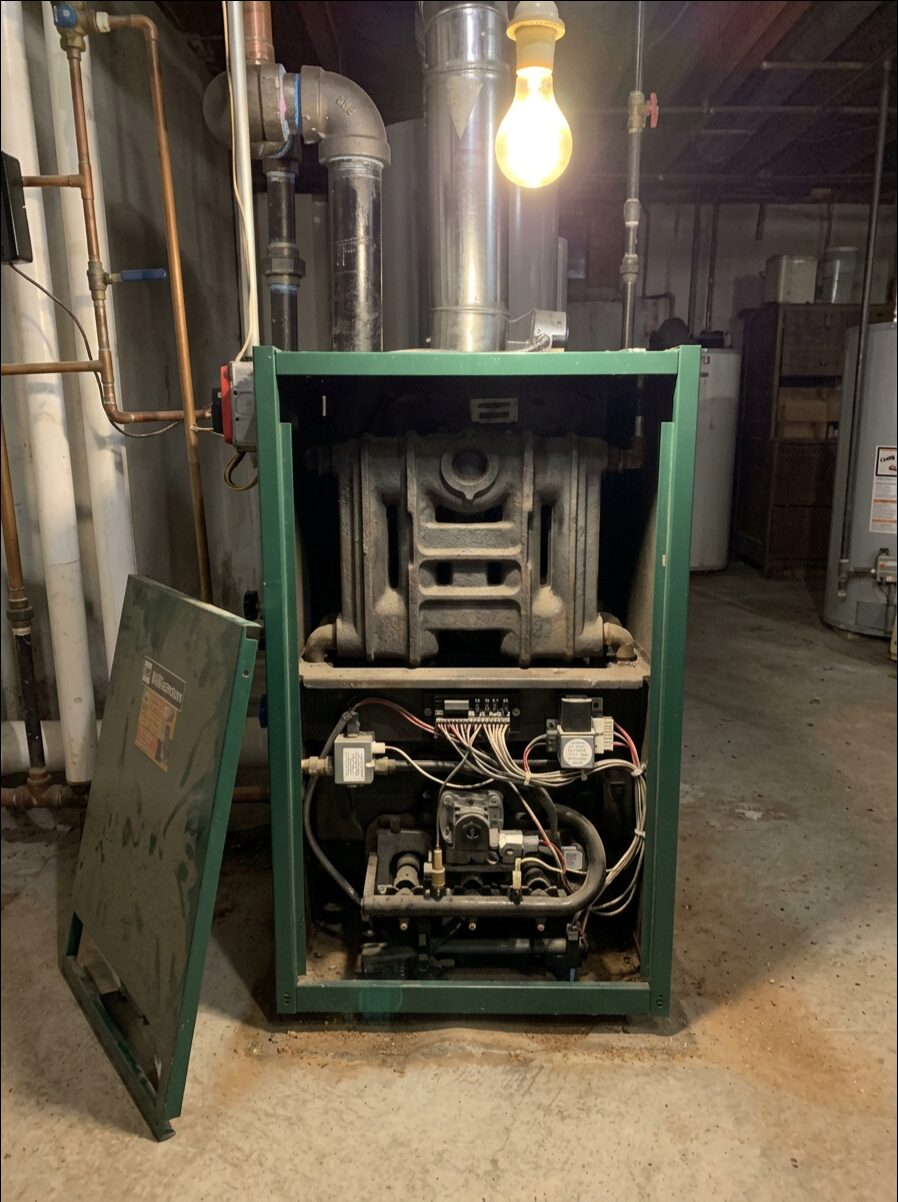
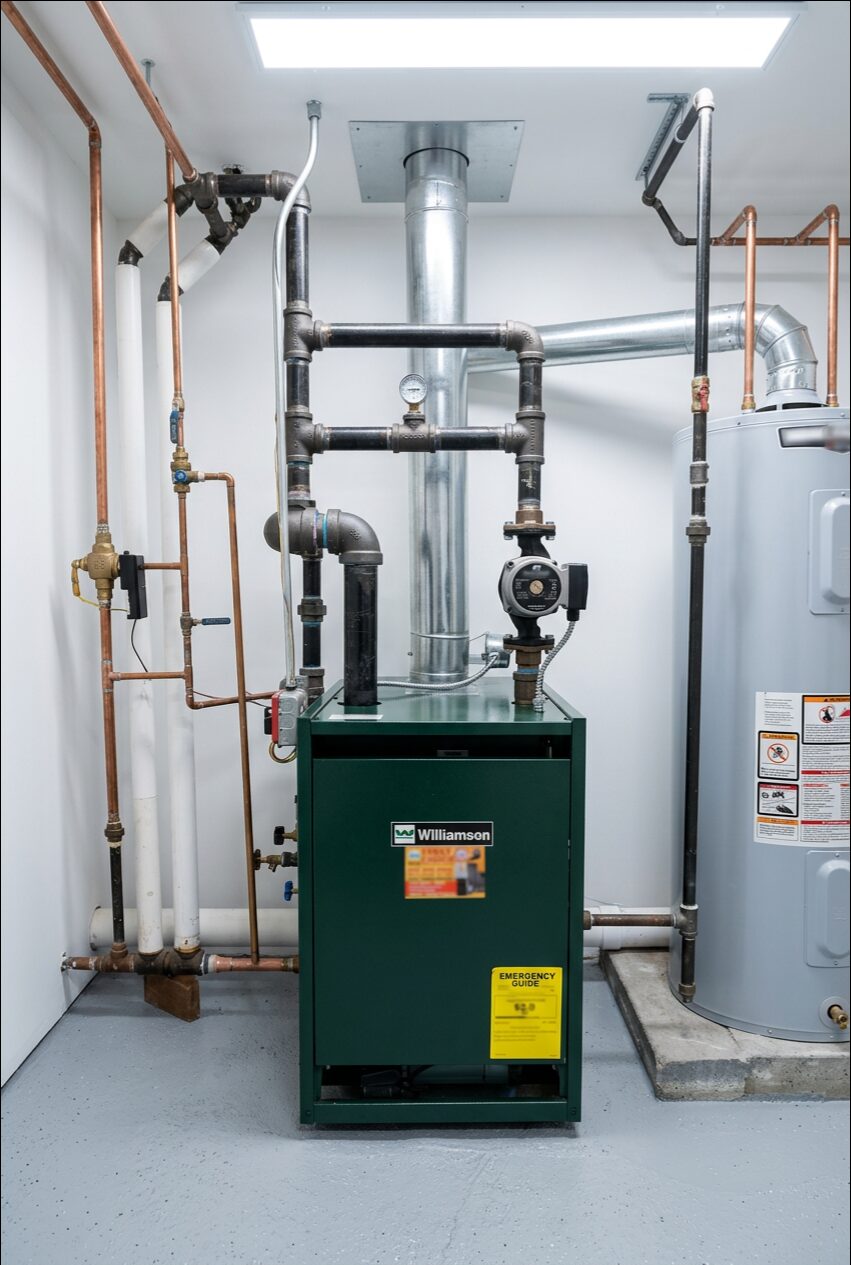
A lot of the housing stock across Hudson County still runs on original steam or hot water distribution with a boiler that has been replaced once or twice over the decades. That mix creates its own faults: modern boilers paired with old near-boiler piping, converted systems that were never rebalanced, and radiators removed during renovations without adjusting anything else.
The practical effect is systems that technically work but never heat evenly. Top floors run cold while the first floor overheats, and the boiler short cycles because the thermostat is satisfied long before the far end of the system gets warm. These are correctable faults, and they are worth fixing before anyone talks about replacing equipment.
What Not To Do
Do not keep pressing reset. Do not add water to a hot steam boiler that has run dry, because introducing cold water into a hot vessel can crack it, and do not bypass a low water cutoff to force the boiler to fire. Do not block combustion air openings in the boiler room, and do not run a system that is leaking water onto the floor.
If you smell gas or heating oil, leave the building and call from outside. A smell of oil around a burner that has been reset several times is particularly serious, because unburned fuel has collected in the chamber.
Frequently Asked Questions
Why is my boiler not turning on when the thermostat calls for heat?+
The usual causes are a shut-off switch that has been turned off, a tripped breaker, a low water condition on a steam boiler, or a burner that has locked out on a safety control. Start with the thermostat settings and batteries, then the emergency switch at the top of the basement stairs, then the breaker. If those are all fine and the burner has locked out, a safety control has detected something and the system needs a technician.
How many times can I press the reset button on my boiler?+
Once. Each reset attempt sends fuel into the combustion chamber, and if the burner is not lighting, that fuel accumulates and becomes a fire hazard. If the boiler locks out again after a single reset, stop and call for service. Repeated resetting is one of the most common ways a manageable repair turns into a dangerous situation.
What pressure should my boiler be at?+
A residential hot water boiler normally reads around twelve to fifteen psi when the system is cold, rising somewhat as it heats up. Pressure below that range usually means the system has lost water through a leak or a failed fill valve. Pressure that climbs well above it points to an expansion tank problem or a fill valve that is not closing, and the relief valve will eventually discharge.
Why is my boiler running but the radiators are cold?+
On a hot water system this normally means the heated water is not circulating, either because the circulator pump has failed, a zone valve is stuck closed, or air is trapped in the piping. On a steam system it usually means steam cannot reach the radiators because of failed air vents or a waterlogged return. In both cases the boiler is working and the distribution side needs attention.
Is it safe to leave a boiler that keeps shutting down?+
A boiler that keeps locking out is being stopped by a safety control, which means the control is working, but the underlying fault has not gone away. Continuing to reset and run it risks fuel accumulation, overheating or water damage depending on which control is tripping. Shut it down and have it diagnosed, and if the building is unheated in freezing weather, treat it as an emergency to protect the pipes.
Last reviewed September 2026 by the service team at Jersey City Plumbing Heating & Cooling.
Contact Us Today!
No heat is treated as an emergency here, and we work on gas steam, gas hot water, oil boilers and hot air furnaces every day of the winter.
Call Jersey City Plumbing Heating & Cooling at (877) 717-8383 or request service online any time.