No Hot Water? How To Find the Cause on a Gas or Electric Heater
Losing hot water entirely and running out too quickly are two different faults with two different causes. Start by working out which one you have.
24/7
Emergency service
Same Day
Most repairs
Licensed
& fully insured
Upfront
Pricing, no surprises
Call (877) 717-8383 for 24 hour service.
Short answer
On a gas water heater, check whether the pilot light or ignition is still lit and that the gas shut-off valve on the supply line is open. On an electric heater, check the dedicated breaker in the panel and the red reset button on the upper thermostat behind the access panel. If you get hot water but it runs out far too quickly, the likely causes are a failed lower heating element, heavy sediment in the tank, or a tank that is simply too small for the household. A heater that produces no hot water at all after these checks needs a technician.
Before you do anything
Do not remove electrical access panels on a water heater without switching the breaker off first. If you smell gas anywhere near the heater, leave the building and call from outside.
Working Through the Cause
- 1
Confirm it is the heater and not one fixture
Run hot water at two or three different taps around the building. If one shower is cold while the kitchen sink runs hot, the problem is that fixture's mixing valve or cartridge, not the water heater. If everything is cold, move on to the heater itself.
- 2
Gas heater: check the pilot or ignition
Look through the sight window at the base of the heater for a lit pilot flame. If it is out, follow the relighting instructions printed on the heater label. If it lights and then goes out again within a minute or two, the thermocouple has usually failed and needs replacing.
- 3
Gas heater: check the gas supply
Confirm the shut-off valve on the gas line to the heater is open, with the handle running in line with the pipe. Check whether other gas appliances in the building are working, since a building wide supply problem needs the utility rather than a plumber.
- 4
Electric heater: check the breaker
Find the dedicated double pole breaker for the water heater and confirm it has not tripped. Reset it once. If it trips again, stop, because a repeated trip usually means a shorted element or damaged wiring, and resetting it repeatedly is not safe.
- 5
Electric heater: press the high limit reset
Switch the breaker off, remove the upper access panel and fold back the insulation to find a red reset button on the thermostat. Press it once. If it trips again after you restore power, the thermostat or an element has failed and the heater needs service.
- 6
Check the temperature setting
Most heaters are set around one hundred and twenty degrees, which is the usual recommendation. If the dial has been knocked down, or the setting was lowered while the building was empty, turning it back up solves the complaint. Do not set it high enough to cause scalding, particularly where there are children in the building.
No Hot Water At All
When the water is stone cold at every tap, something has stopped the heater working entirely rather than degraded its performance. The causes split cleanly by fuel type.
- Gas: pilot light out, failed thermocouple, closed gas valve, or a failed gas control valve
- Electric: tripped breaker, tripped high limit switch, or both heating elements failed
- Either type: a failed thermostat that never calls for heat
- Either type: the unit has been switched to vacation or pilot mode and never switched back
- Tankless: a flow sensor or ignition fault, or a unit locked out on an error code
- Any type: a closed cold water inlet valve, which stops fresh water reaching the tank
Hot Water That Runs Out Too Fast
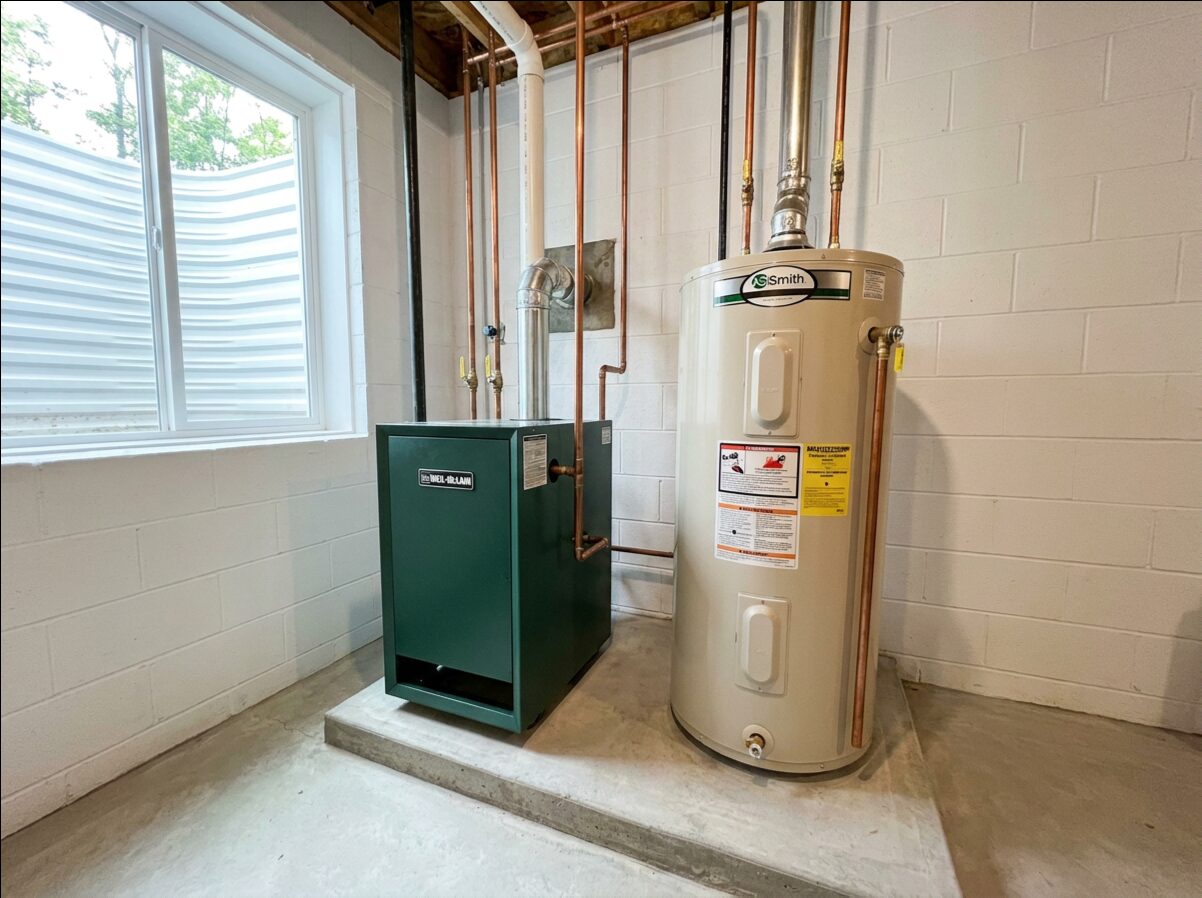
This is the more common complaint and it means the heater is working, just not keeping up. On an electric heater the classic cause is a failed lower element, which leaves the upper element heating only the top third of the tank. You get a short burst of hot water and then cold, every single time.
The other big cause is sediment. Minerals settle to the bottom of the tank and form a layer that insulates the water from the burner or lower element, which shrinks the usable capacity and makes the heater work harder for less output. A heater that has never been flushed in ten years can lose a serious fraction of its tank to sediment.
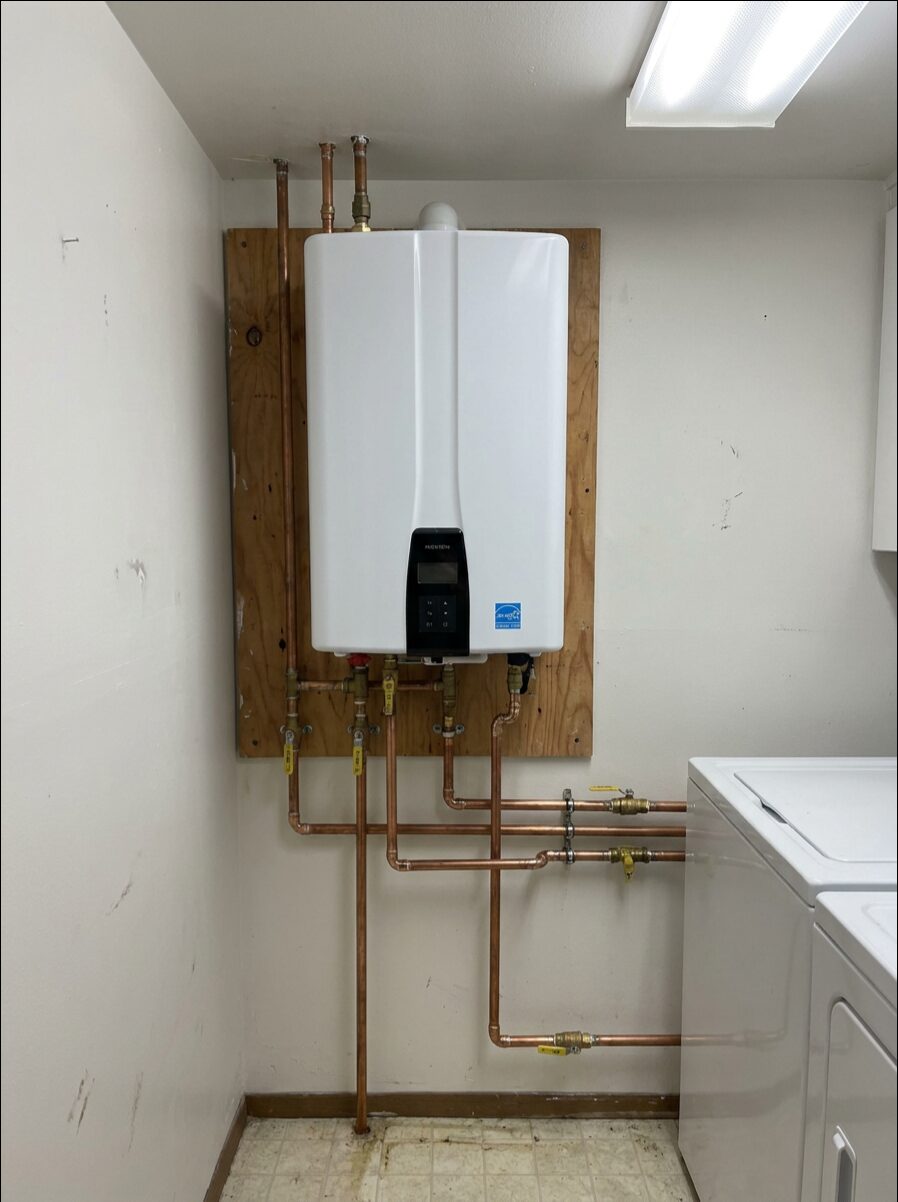
The third cause is not a fault at all. If a bathroom has been added, or a household has grown, a forty gallon tank that was adequate when it was installed may simply be undersized now. No repair fixes that, and the answer is either a larger tank or a tankless unit sized to the demand.
Lukewarm Water and Temperature Swings
Water that never gets properly hot, or swings between hot and cold during a shower, usually points at the mixing side rather than the heater. A failed tempering valve, a crossed connection where hot and cold meet somewhere in the plumbing, or a worn shower cartridge all produce exactly this.
On gas heaters, a burner that is dirty or partially blocked will heat slowly and never quite reach setpoint. On tankless units, low flow rates and scale buildup in the heat exchanger cause the same complaint, which is why annual descaling matters more on tankless than most owners expect.
Older Buildings and Hot Water Supply
In the row houses and converted multi-family buildings common across Jersey City, water heaters end up in closets, crawl spaces and shared basements with long runs of pipe to the furthest bathroom. That distance alone means a wait at the tap that has nothing to do with the heater's condition.
Corroded galvanized supply piping makes it worse by restricting flow on upper floors, so the same heater that serves the first floor fine cannot deliver upstairs. When a hot water complaint only affects one part of the building, the piping is usually the real subject rather than the heater.
When To Repair and When To Replace
Thermocouples, elements, thermostats, gas control valves and anode rods are all replaceable parts, and on a heater under roughly eight years old a repair is normally the sensible route. Flushing sediment and replacing an anode rod can add years to a tank that is otherwise sound.
Past ten to twelve years, or where the tank itself is leaking, repair stops making sense. At that point it is worth sizing the replacement to current household demand rather than matching whatever was there before, and looking at whether a tankless unit fits the space, the venting and the gas supply.
Frequently Asked Questions
Why do I have no hot water all of a sudden?+
On a gas heater the most common sudden cause is a pilot light that has gone out or a failed thermocouple that shuts the gas off. On an electric heater it is usually a tripped breaker or a tripped high limit reset switch on the upper thermostat. Check those first, and if the pilot will not stay lit or the breaker trips again, the unit needs service rather than another reset.
Why does my hot water run out so fast?+
On an electric heater, a failed lower heating element is the classic cause, because only the top of the tank is being heated and you get a short burst before it turns cold. Sediment built up on the tank bottom also reduces usable capacity and makes the heater less efficient. If the heater is working correctly and still cannot keep up, the tank is probably undersized for how much hot water the household now uses.
What temperature should a water heater be set to?+
Around one hundred and twenty degrees Fahrenheit is the usual recommendation, which is hot enough for normal household use while reducing the risk of scalding. Setting it much higher wastes energy and is a genuine burn hazard, particularly with young children in the building. If you need higher storage temperatures for capacity reasons, a tempering valve should be fitted to mix it down at the fixtures.
Why does my water heater pilot light keep going out?+
The most common reason is a failing thermocouple, the safety device that senses the pilot flame and holds the gas valve open. When it weakens, it stops signalling that the flame is present and the valve shuts. Drafts near the burner, a dirty pilot orifice, and a blocked flue can produce the same symptom, so the cause should be confirmed rather than just replacing parts.
How long should a water heater last?+
A conventional tank heater typically runs ten to twelve years, though hard water and a neglected anode rod shorten that considerably. Tankless units often last longer, provided they are descaled on a regular schedule. Annual flushing and periodic anode rod inspection are the two things that make the most difference to how long a tank survives.
Last reviewed September 2026 by the service team at Jersey City Plumbing Heating & Cooling.
Contact Us Today!
Whether the heater has stopped entirely or just cannot keep up, we can diagnose it and tell you honestly whether it is a part or a replacement.
Call Jersey City Plumbing Heating & Cooling at (877) 717-8383 or request service online any time.