Sewage Backing Up in the Basement: Emergency Steps and Causes
Sewage coming up through a basement floor drain means the main line out of the building is blocked. Everything above that drain will keep backing up until it is cleared.
24/7
Emergency service
Same Day
Most repairs
Licensed
& fully insured
Upfront
Pricing, no surprises
Call (877) 717-8383 for 24 hour service.
Short answer
Stop using every fixture in the building immediately, including toilets, sinks, the washing machine and the dishwasher, because each one adds to the backup. Keep people and pets out of the standing water, since sewage carries bacteria and may be in contact with electrical circuits. Do not pour drain chemicals into the line. Call a plumber to clear the main line through the cleanout, and have the line camera inspected afterwards so you know whether the blockage was grease, roots or a collapsed section.
Before you do anything
Sewage water is a biohazard. Do not wade into it, and if it has reached outlets, the furnace, the boiler or the electrical panel, shut the power to the basement off at the panel before anyone goes near it.
What To Do the Moment Sewage Appears
- 1
Stop all water use in the building
Every gallon that goes down a drain upstairs comes back up in the basement. Tell everyone in the building to stop flushing toilets, running taps, showering, and using the washing machine or dishwasher. In a multi-family building this means notifying the other units, because their drains feed the same stack.
- 2
Keep everyone out of the water
Sewage carries bacteria and the water may be in contact with electrical circuits, appliances or the heating system. Close the basement door, keep children and pets away, and do not attempt to wade through it to reach the drain.
- 3
Cut power to the basement if water is near equipment
If the water has reached outlets, the furnace, the boiler, a water heater or the panel itself, switch those circuits off at the breaker panel, provided you can reach the panel without standing in water. If you cannot reach it safely, leave the power alone and say so when you call.
- 4
Do not pour chemicals down the drain
Drain cleaner will not clear a blocked main line, and it turns standing sewage into a caustic mix that is dangerous for anyone working in it afterwards. It also damages older cast iron and clay pipe. Leave the line alone until it can be cleared mechanically.
- 5
Photograph everything
Before any cleanup starts, take photos and video of the water level, the affected area and any damaged belongings. If you plan to make an insurance claim or raise the issue with a landlord or the city, that record is far more useful than a description after the fact.
- 6
Call for emergency service
Call (877) 717-8383 and describe which fixtures are backing up, whether it is one drain or several, and whether the water is still rising. A backup affecting multiple fixtures at once is a main line problem and gets treated as an emergency.
Why the Basement Floor Drain Backs Up First
Wastewater from every fixture in the building flows into one main line heading out to the sewer. When that line is blocked, the water has to go somewhere, and it exits at the lowest opening in the system. In almost every building that is the basement floor drain, the laundry standpipe or a basement toilet.
That is why a single slow sink is a fixture problem while sewage in the basement is a main line problem. If flushing a toilet on the first floor makes water rise in the basement, the blockage is downstream of both of them and clearing the fixture itself accomplishes nothing.
What Actually Causes Main Line Blockages
Older Hudson County housing stock is served largely by cast iron and clay laterals that have been in the ground for decades. Those materials fail in predictable ways, and the cause determines whether you need a cleaning or a repair.
- Tree roots: fine roots enter through joints and cracks, then grow into a mat that catches everything passing through
- Grease: cooking grease cools and coats the pipe wall, narrowing it until solids no longer clear
- Wipes and hygiene products: flushable wipes do not break down and snag on any rough spot in the line
- Scale and corrosion: old cast iron builds an internal crust that reduces the working diameter
- Bellied pipe: a section that has sagged holds water and solids permanently
- Offset or collapsed joints: ground movement separates the pipe, and the line has to be repaired rather than cleaned
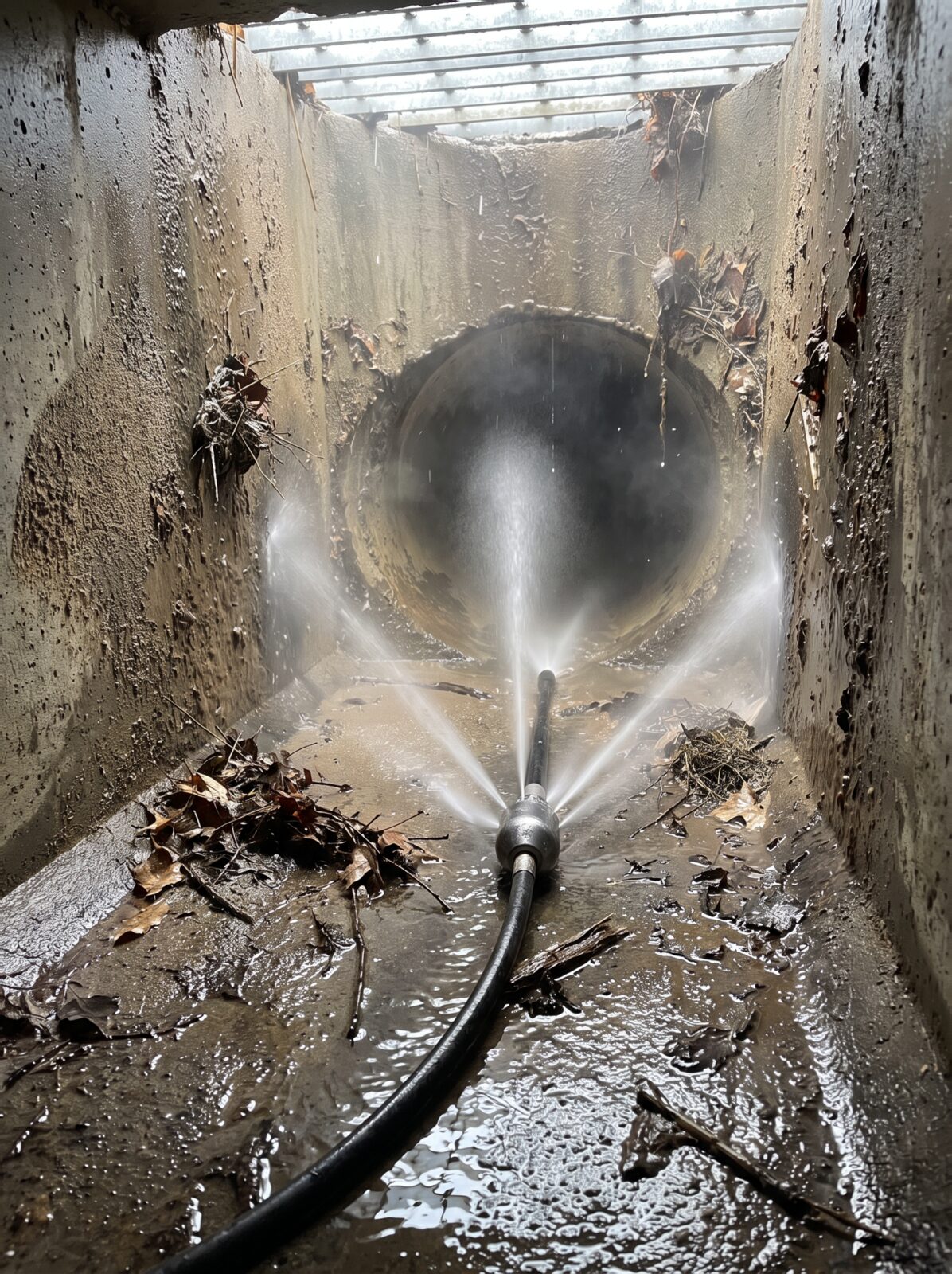
Clearing the Line and Finding Out Why
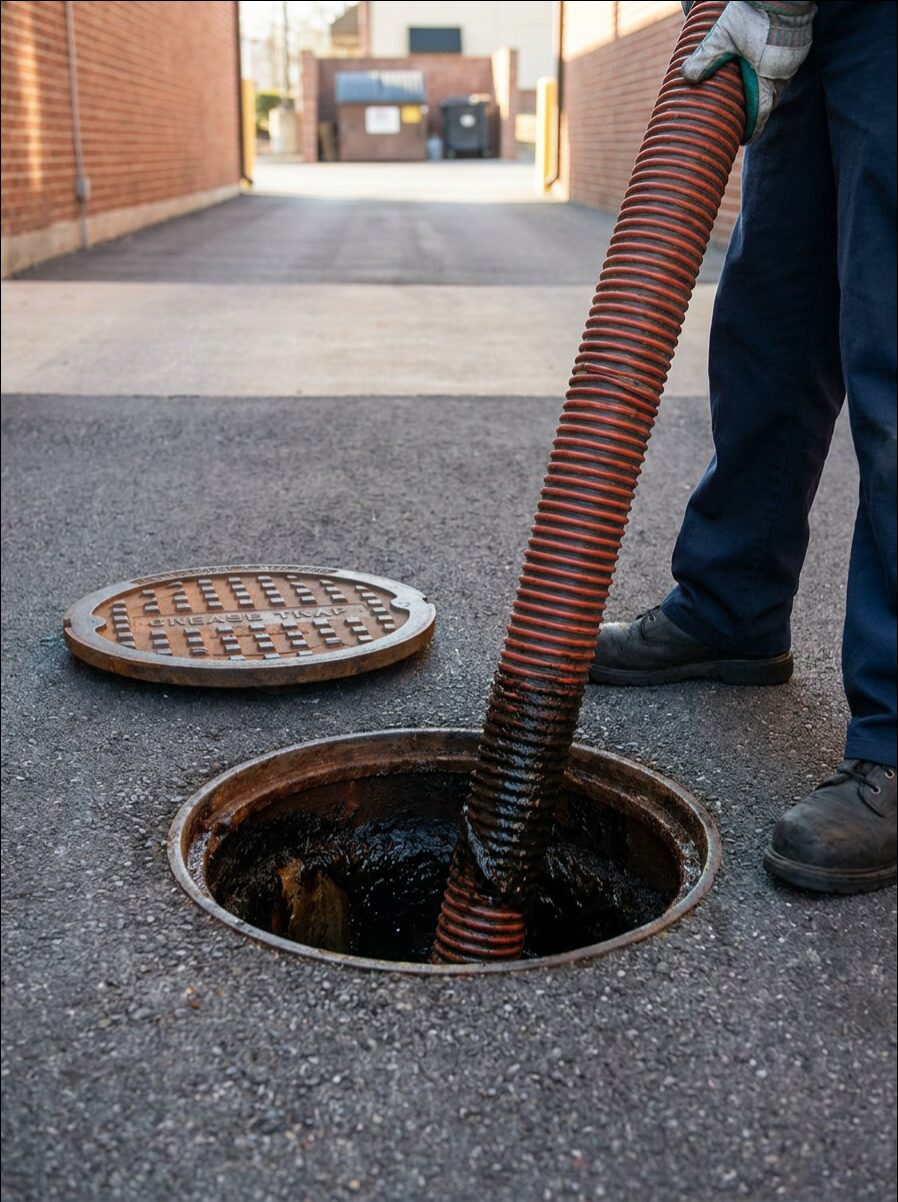
The first job is restoring flow, which is done by cabling the line through the cleanout or hydro jetting it if the blockage is grease or heavy buildup. Cabling punches through an obstruction quickly, while jetting scours the pipe wall back toward its original diameter and is the better choice when the same line keeps clogging.
The second job matters more. Running a camera down the cleared line shows what caused the blockage and exactly how far down it sits. A line that keeps backing up every few months is telling you there is a structural defect, and no amount of repeat cabling will change that. Once the camera locates a root intrusion, a belly or a break, the repair can be scoped to that section instead of the whole run.
Who Is Responsible for the Sewer Line
In most New Jersey municipalities the property owner is responsible for the lateral, which is the pipe running from the building out to the connection with the public main. The city or utility maintains the main itself. That division is why a backup affecting only your building is nearly always the owner's lateral rather than a municipal problem.
If several neighboring properties are backing up at the same time, the main may be the issue and the municipality should be notified. For insurance, standard homeowners policies typically exclude sewer backup unless a specific endorsement was added, so it is worth checking the policy before assuming the cleanup is covered.
Preventing the Next Backup
Most repeat backups are preventable once the cause is known. Grease should never go down a drain, wipes belong in the trash regardless of packaging claims, and a line with known root intrusion needs scheduled maintenance rather than emergency calls.
Where a building has a history of backups, a backwater valve stops sewage from reversing into the basement, and a properly maintained sump pump handles groundwater that would otherwise add to the load. Both are worth discussing if the basement is finished or holds a boiler, water heater or laundry.
Frequently Asked Questions
What causes sewage to back up in a basement?+
A blockage in the main line leaving the building forces wastewater back up through the lowest opening, which is usually the basement floor drain. The most common causes are tree roots growing into an old clay or cast iron lateral, accumulated grease narrowing the pipe, and flushed wipes that never break down. A collapsed or sagging section of pipe causes the same symptom and needs repair rather than cleaning.
Does homeowners insurance cover sewer backup?+
Standard homeowners policies typically exclude sewer and drain backup unless a specific water backup endorsement was purchased. That endorsement is usually inexpensive and has its own coverage limit, which is often lower than people expect. Check your declarations page for water backup coverage, and photograph the damage before any cleanup begins.
Is the city responsible for my sewer backup?+
In most New Jersey towns the property owner owns and maintains the lateral running from the building to the public main, while the municipality maintains the main itself. If only your property is backing up, the problem is almost certainly in your lateral. If several neighboring properties back up at the same time, notify the municipality because the main may be blocked.
Can I use drain cleaner on a sewer backup?+
No. Chemical drain cleaners are designed for small fixture clogs and will not move a blockage in a main line that is several inches in diameter. The chemical sits in the standing water, creates a hazard for anyone working in it, and can damage older cast iron and clay pipe. The line needs to be cleared mechanically through the cleanout.
How do I know if my sewer line is blocked or just one drain?+
If more than one fixture is slow or backing up at the same time, especially on different floors, the problem is in the main line rather than a single fixture. Another reliable sign is a reaction in one fixture when you use another, such as a toilet flush that pushes water up through the shower or basement drain. A single slow sink with everything else draining normally is a fixture level clog.
Last reviewed September 2026 by the service team at Jersey City Plumbing Heating & Cooling.
Contact Us Today!
Sewage in a basement is an emergency, and we clear main lines and camera inspect them around the clock across Jersey City and Hudson County.
Call Jersey City Plumbing Heating & Cooling at (877) 717-8383 or request service online any time.