Water Heater Leaking From the Bottom: What To Do Right Now
Water pooling under a water heater is either a fitting you can tighten or a tank that has rusted through. The steps below tell you which one you are dealing with.
24/7
Emergency service
Same Day
Most repairs
Licensed
& fully insured
Upfront
Pricing, no surprises
Call (877) 717-8383 for 24 hour service.
Short answer
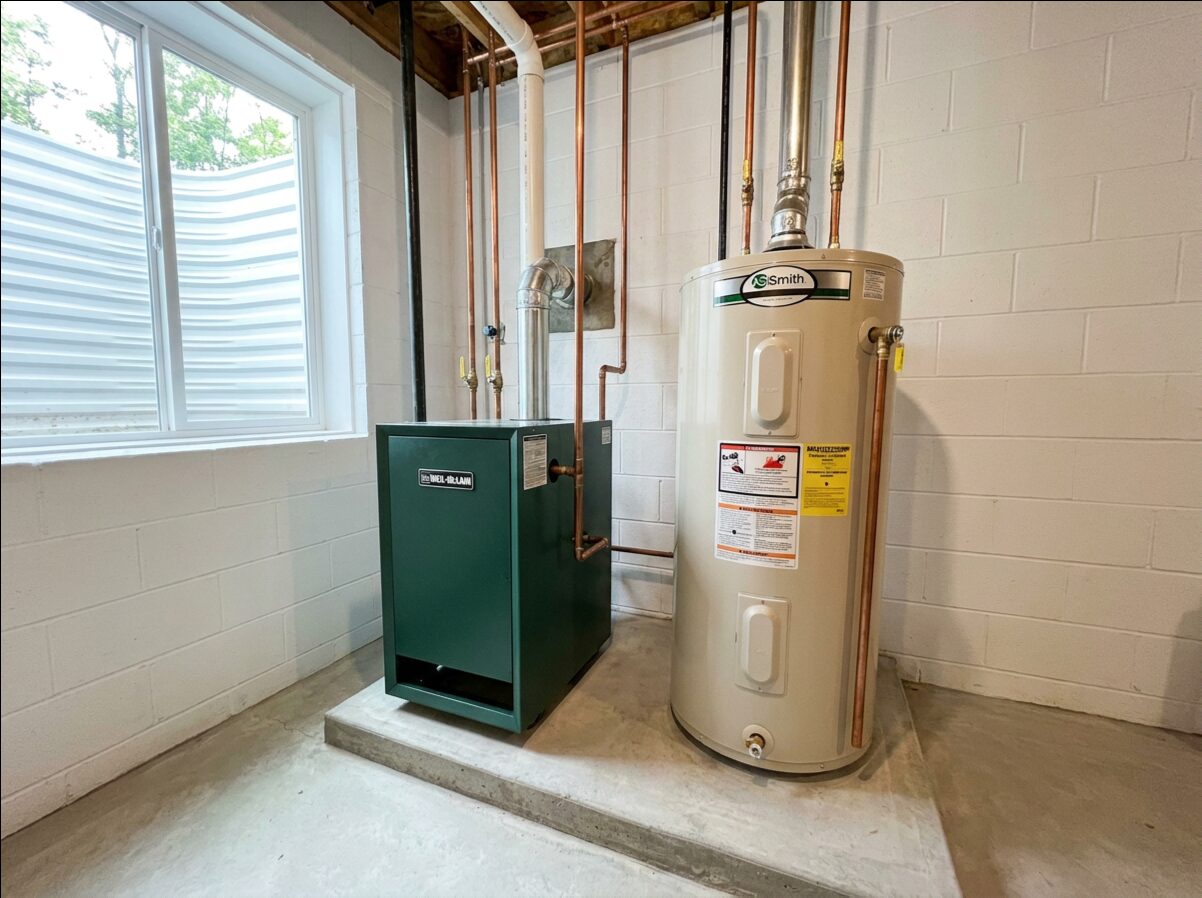
Turn off the cold water supply valve on top of the heater, then cut the power at the breaker for an electric unit or set a gas unit to the pilot or off position. Put a pan or towels under the leak and check where the water is actually coming from. Water dripping from a fitting, the drain valve or the temperature and pressure relief line is usually repairable. Water seeping from under the tank itself means the inner tank has failed and the heater has to be replaced.
Before you do anything
If you smell gas, see scorching around the burner, or the leak is running onto electrical equipment, leave the area and call us before touching anything. A tank that is bulging or venting steam should be treated as an emergency.
Emergency Steps Before the Technician Arrives
- 1
Shut off the cold water supply
Find the cold water inlet on top of the heater, usually the pipe with a valve on the right side, and turn the handle clockwise until it stops. A lever style ball valve turns a quarter turn so the handle sits across the pipe. If that valve will not close, shut the main water valve where the service line enters the building.
- 2
Cut the heat source
On an electric heater, switch off the dedicated breaker in the panel. On a gas heater, turn the control dial to pilot or off, and close the gas shut-off valve on the supply line if the leak is heavy. Never let an electric element run in a tank that is draining, because the element will burn out within minutes.
- 3
Contain the water
Put down towels and a shallow pan, and move anything stored nearby off the floor. In the tight basements and utility closets common in Jersey City row houses, a slow leak reaches drywall and stored belongings long before anyone notices the puddle.
- 4
Find the actual source
Dry the area completely, then watch for a minute. Water at the brass drain valve near the floor, at the union fittings on top, or running down the discharge pipe from the relief valve all point to a part that can be replaced. Water appearing from underneath the jacket with no visible fitting above it means the tank is leaking.
- 5
Drain the tank if the leak is heavy
Attach a garden hose to the drain valve, run it to a floor drain or outside, and open the valve to relieve the tank. Open a hot water faucet somewhere in the building so the tank can vent and drain properly. Skip this step if the water is scalding and you cannot handle it safely.
- 6
Call for service
Call (877) 717-8383 and say whether the water is coming from a fitting or from under the tank, whether the unit is gas or electric, and roughly how old it is. That tells us whether to arrive with repair parts or a replacement unit.
Why Water Heaters Leak From the Bottom
Water always runs downhill, so a leak that shows up on the floor did not necessarily start there. Before assuming the tank is finished, the source has to be traced back up the unit. Four causes account for nearly every bottom leak we get called out on, and only one of them requires a new heater.
- Drain valve: the brass or plastic valve at the base weeps when the washer inside fails or debris holds it open. Often a straight replacement.
- Temperature and pressure relief valve: the discharge pipe running down the side dumps water when pressure or temperature climbs too high, or when the valve seat is fouled with sediment.
- Inlet and outlet connections: a corroded nipple or a loose union on top drips down the outside of the tank and collects underneath.
- Condensation: a gas heater running with very cold incoming water can sweat and drip during heavy use, which looks like a leak but stops once the tank is up to temperature.
- Internal tank failure: sediment and corrosion eat through the glass lining and the steel beneath it, and the water seeps out through the insulation. This one is not repairable.
How To Tell a Repairable Leak From a Dead Tank
Dry everything thoroughly, including the top of the heater and the floor, then watch where the first new drop appears. If it forms at a threaded joint, a valve body or the end of the relief discharge pipe, the tank is intact and the part gets replaced. If water works its way out from beneath the sheet metal jacket with nothing wet above it, the inner tank has perforated.
Rusty or brown water coming out of the leak is another strong sign the steel is failing. So is a tank past the ten to twelve year mark, particularly in buildings with hard water or where the anode rod was never changed. Once the inner tank is compromised there is no patch, weld or sealant that makes it safe to keep in service.
How Dangerous Is a Leaking Water Heater
A slow drip is mainly a water damage and mold problem, and in a shared wall building it becomes your neighbor's problem fast. A tank that lets go all at once releases forty to eighty gallons onto the floor, which is why the shut-off valve location is worth knowing before you need it.
The genuine safety risk is a relief valve that is discharging repeatedly. That valve is the last defense against a tank overheating, and constant discharge means either the thermostat is running away or the system pressure is too high. Neither should be left alone, and neither should the valve ever be capped or plugged.
Repair or Replace
Valves, thermocouples, elements, thermostats and anode rods are all replaceable, and on a heater that is under roughly eight years old a repair usually makes sense. Past that point the economics shift, because a repair on a tank that is already thinning only buys time.
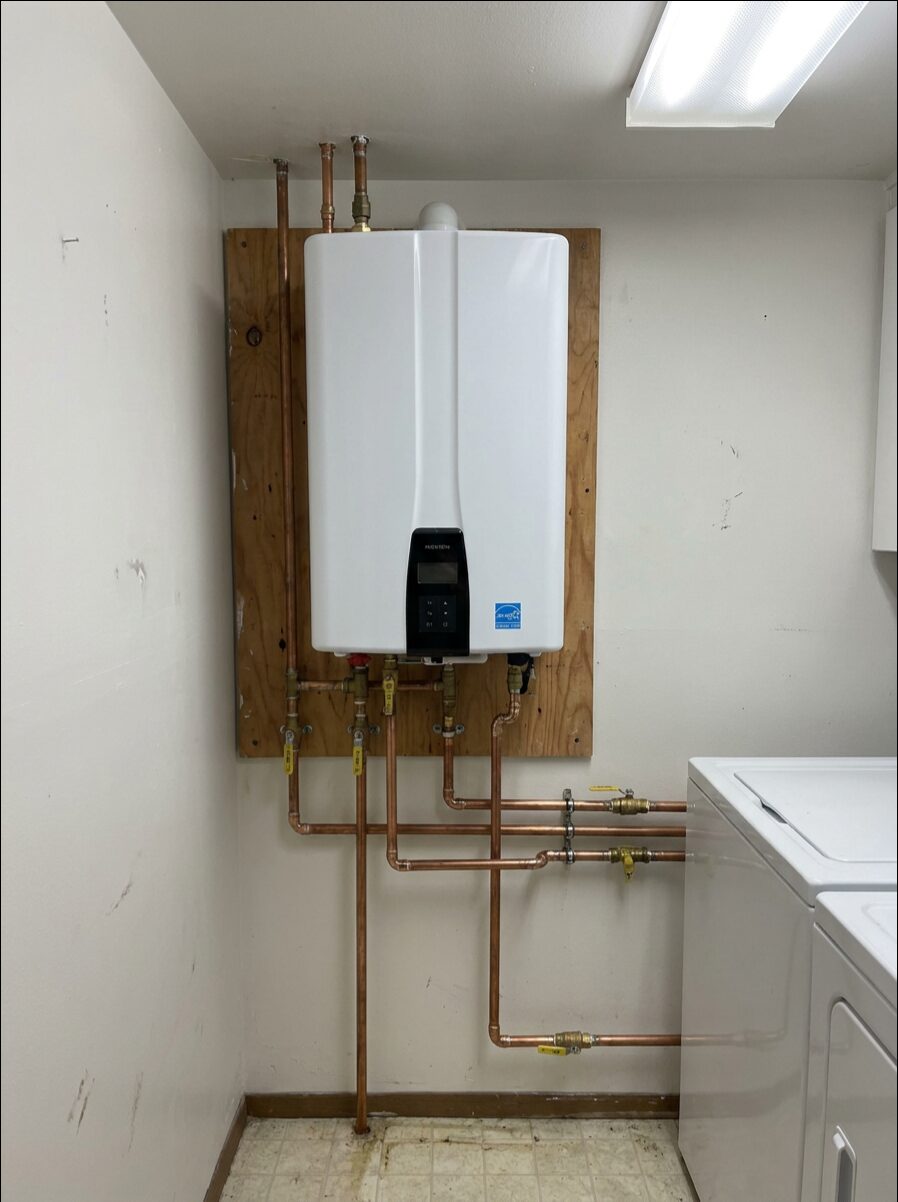
If the unit is being replaced anyway, it is worth checking that the sizing still matches the household. Adding a bathroom or a second full bath to an older Jersey City home frequently leaves a forty gallon tank permanently behind. Tank and tankless options both work in tight mechanical rooms, and venting and gas supply determine which one is practical.
- Under 8 years old with a fitting leak: repair is normally the right call
- Any age with water seeping from under the jacket: replacement, no exceptions
- Repeated relief valve discharge: diagnose the cause before replacing anything
- Running out of hot water plus a leak: size the replacement to current usage
- Rusty hot water at the taps: the tank lining is already failing
Preventing the Next One
Sediment is what kills most tanks, and it builds up fastest at the bottom where the burner or lower element does its work. Flushing a few gallons through the drain valve once a year keeps that layer down and makes the heater run quieter and cheaper. Checking the anode rod every few years matters even more, because once the rod is consumed the tank becomes the sacrificial metal.
A drip pan plumbed to a drain is cheap insurance in a finished basement or a closet above living space. So is an expansion tank where one is required, since trapped pressure in a closed system shortens tank life and sets off the relief valve.
Frequently Asked Questions
Is a leaking water heater dangerous?+
A small drip from a fitting is mostly a water damage risk rather than a safety hazard, though it will rot subfloor and drywall if it is ignored. The real danger is a relief valve discharging repeatedly, which means the tank is overheating or over pressurized and needs immediate attention. A bulging tank, scorch marks, or a gas smell should be treated as an emergency and the gas shut off at the valve.
Can a water heater leaking from the bottom be repaired?+
It depends on what is actually leaking. A failed drain valve, a dripping relief valve, or a corroded inlet or outlet connection can all be replaced and the heater put back in service. If water is seeping out from under the jacket with no wet fitting above it, the inner tank has rusted through and the only fix is a new water heater.
How long do I have before a leaking water heater fails completely?+
There is no reliable timeline. A tank that is weeping through corrosion can hold for weeks or split open the same day, because the failure depends on how thin the steel has become and what the pressure does next. Once you know the tank itself is leaking, shut the water supply off and plan the replacement rather than waiting to see what happens.
Why is water coming out of the pipe on the side of my water heater?+
That pipe is the discharge line for the temperature and pressure relief valve, and water leaving it means the valve opened. Common causes are a thermostat set too high, sediment holding the valve seat open, or excessive water pressure in a closed system that has no expansion tank. The valve is doing its job, so the cause needs to be diagnosed rather than the valve capped or replaced blindly.
How much water will spill if my water heater bursts?+
A standard residential tank holds forty to eighty gallons, and all of it reaches the floor within a few minutes when the tank splits. The cold water line keeps refilling the tank as it empties unless the supply valve is closed, so the total volume can be far higher. Knowing where the cold inlet valve and the main shut-off are located is the single most useful thing a homeowner can do in advance.
Last reviewed September 2026 by the service team at Jersey City Plumbing Heating & Cooling.
Contact Us Today!
If your water heater is leaking, losing pressure or running cold, we can get a technician out and tell you straight whether it is a repair or a replacement.
Call Jersey City Plumbing Heating & Cooling at (877) 717-8383 or request service online any time.